
Sciatica must rate as one of the most painful of back conditions that is commonly diagnosed and most misunderstood.
Many conditions can produce the symptoms frequently seen with sciatica. Chiropractors have the skills to identify the underlying cause of the symptoms and are frequently able to help resolve it.
Sciatica… What is it though?
It is a conditions caused when anything irritates the great big sciatic nerve (largest nerve in the human body), which anatomically travels from the back, down the bum and into the leg.
The sciatic nerve is one of the longest and the largest nerve in your body with five smaller nerves feeding into it, extending from the spine via the pelvis to the muscles and joints of the legs and feet.
Whenever any of these nerves are pinched, compressed or compromised in any way, it will cause discomfort that is often referred to as sciatica.
How does it feel?
As anyone who has suffered with sciatica will tell you, the pain can be very intense.
It often (but not always) starts suddenly in the lower back, then over the next few days progresses and grows travelling down the bum and legs.
The pain itself often follows the path of your nerve – down the back of the legs and thighs, ankle, foot and toes -but it can also focus and stay localised in your back.
The pain consists of burning and sharp pains though some sufferers report feeling such as pins-and-needles, tingling, prickling, crawling sensations or tenderness. Some even say their leg goes numb or develop weakness in their feet.
People usually end up being bent over and to the side to relieve the pain a little.
What Causes it in the first place?
Sciatica is caused by a wide variety of conditions which result in an dtysfunctioning back,
Causes include:
-a protruded or ruptured disc, and local inflammation which lead to abnormal function in the blood vessels, spinal cord and nerves exiting the spine.
-Often it is linked with postural problems, faulty movements and nervous system imbalances contributing to stress on the spine.
-can also result from accidents, sports injuries and even childbirth.
-Piriformis syndrome – where the piriformis muscle entangles and pressures the sciatic nerve as it travels down the leg is reffered to as a separate condition although the symptoms are very closely mimicked.
Why do these “causes” happen in the first place?
variety of reasons can make you prone and susceptible to developing these conditions :
-smoking
-obesity / being overweight
-career/ job Demands on the body — desk workers, manual labourers,
-De-conditioned, those not meeting guidelines for weekly activity/exercise
-occupational exposure – lifting, asymmetrical abnormal loading, vibration, sitting – ARE ALL MICROTRAUMAS
-hypermobility
-hereditary – mimes or family behaviour to pain / learned? – theory
-congenital defects
– poorer general health and nutritional intake are more susceptible
How often and in whom?
If you are visiting this page, you are likely to know someone whom has had Or may have had it yourself.
Between 3-5% of those with back and leg pain have true Sciatica. Otherwise it could be secondary separate pains presenting together, or piriformis syndrome as discussed earlier among other things.
Usually occurs most in those between the ages 30-45.
if you have had previous back niggles – then you are also at risk.
So, what can help?
Conventional medicine can sometimes find spinal related pain problems difficult to deal with, however the holistic approach used by chiropractors is often very effective*.
A chiropractor deals with poor spinal alignment and nerve pressure by helping to relieve stress on the spinal nerves, joints and discs. The treatment and self-help measures they recommend also help to reduce inflammation and promote healing of the soft tissues.
If you are suffering from symptoms of sciatica do not delay contacting chiropractic clinic– we often can bring pain relief very early on in the treatment plan.
A chiropractor deals not only with the symptoms but also the cause of pain too – which means that your long term health and a future without painful sciatica RE-OCCURRING is our aim. We would aim to do this with through treatment and a range of simple exercises and other self-help measures to help prevent the pain from returning.
These suggestions include strategies that you can easily adopt to effectively change your posture while walking or sitting, rebalance your nervous system, learn how to strengthen or stretch certain muscles and even changing your diet or sleeping position.
A chiropractor will not only make the manual adjustments necessary for your spine in a pain-free way but also give you the tools you need to change whatever you have to so that your health and wellbeing improves.
Try some of these tips today!
Sometimes If your in too much pain – you may wish to speak to your pharmacist, to get pain relief medication.
TO DO @ HOME ?
-Get up / get moving / stay up
Especially if you have desk job – you NEED to get up. Keep walking for 20 minutes every 3 hours.
Remember when you sit down there can be upto 200X more pressure in your back.
– Ice Pack and Heat Pad
Use a proper cold ice pack (wrapped in a thin towel) and place it on your BACK (and if you need to, your leg) for 20 minutes. MINIMUM 10 times per day.
After each session of ice – you can then immediately use a heat pack/ hot water bottle- for 10 minutes (half the time of ice).
-Leg wave ??
If you are able to stand — then stand on the first step of the stairs. With the painful leg hanging off the step.
Then gently wave / swing the leg forwards and backwards whilst simultaneously moving the foot as if you are pressing the car pedals. (This is a nerve floss and can be more effective when the leg pain is greater than the back pain)
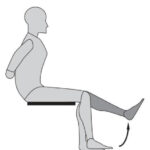
These nerve flossing techniques are here to help move and unstick you’re nerves through theIr path in the body. Pain is normal in this movement, your goal is to get some tension in the leg / nerves. Try and avoid any pain during this movement if it exceeds 3/10. This is very useful to speed up recovery. Perform this floss 10x. 3 times per day.
– Decompression types
Traction aka decompression is a great technique to relieve the pressure in the joints and on your disc and nerves in the lower back. This movement will open them up. Traction is also good for those not in much pain and are very active also – especially after heavy lifting.
Contact and go and see one of our Chiropractors to learn more!
From the Preston Chiropractor Team
Getting You Back in Action & Enjoying Your Life Again
Serving the people of Preston and surrounding areas including Southport and Lytham St Annes